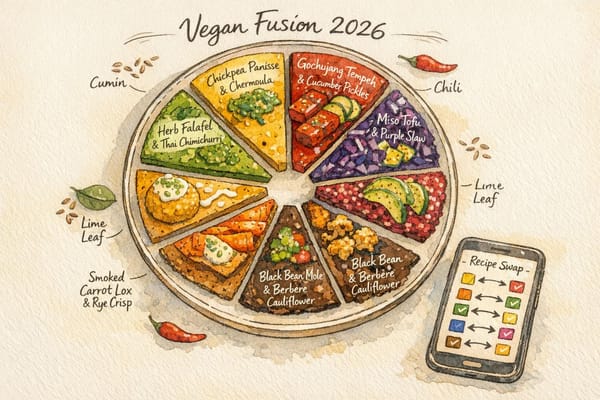
How AI Predicts Vegan Recipe Trends
How AI analyzes social, search, and retail data to forecast vegan ingredients, improve plant-based substitutes, and streamline meal planning.

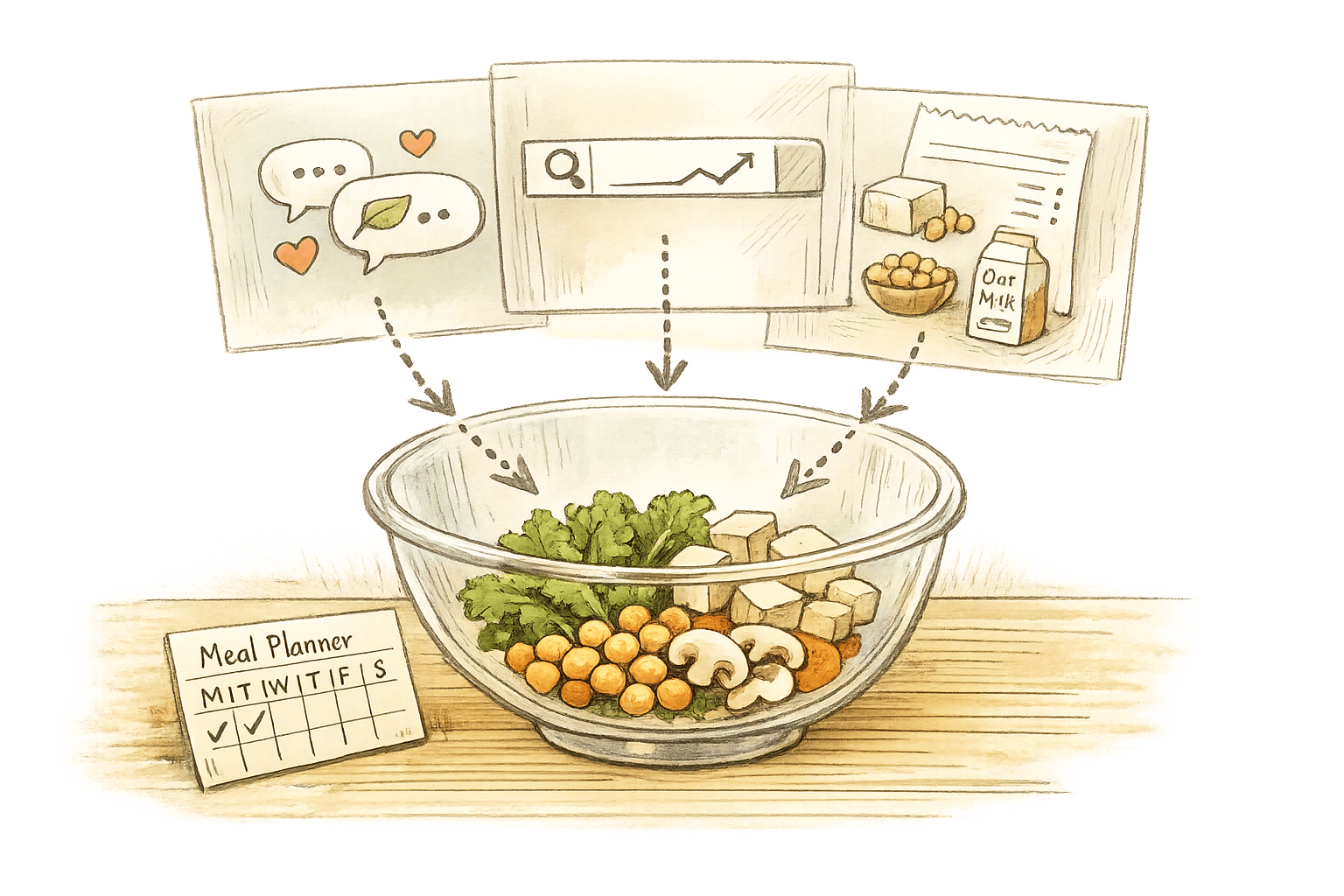
Artificial intelligence is transforming how vegan recipes are discovered and developed. By analyzing vast amounts of data from social media, search engines, and grocery trends, AI predicts emerging plant-based ingredients and cooking techniques before they hit the mainstream. In 2026, AI-driven tools are shaping the future of vegan cuisine with:
- Trend Prediction: AI tracks spikes in searches, hashtags, and ingredient mentions to forecast trends like mycelium protein, fermented foods, and cabbage "steaks."
- Recipe Development: AI analyzes molecular structures to create plant-based alternatives for dairy, eggs, and meat, ensuring better taste and texture.
- Meal Planning: Tools like Honeydew Recipe Manager simplify meal prep, reduce food waste by up to 76%, and save households about $125 monthly.
From forecasting trends to personalizing recipes, AI is making plant-based cooking more efficient, accessible, and flavorful.
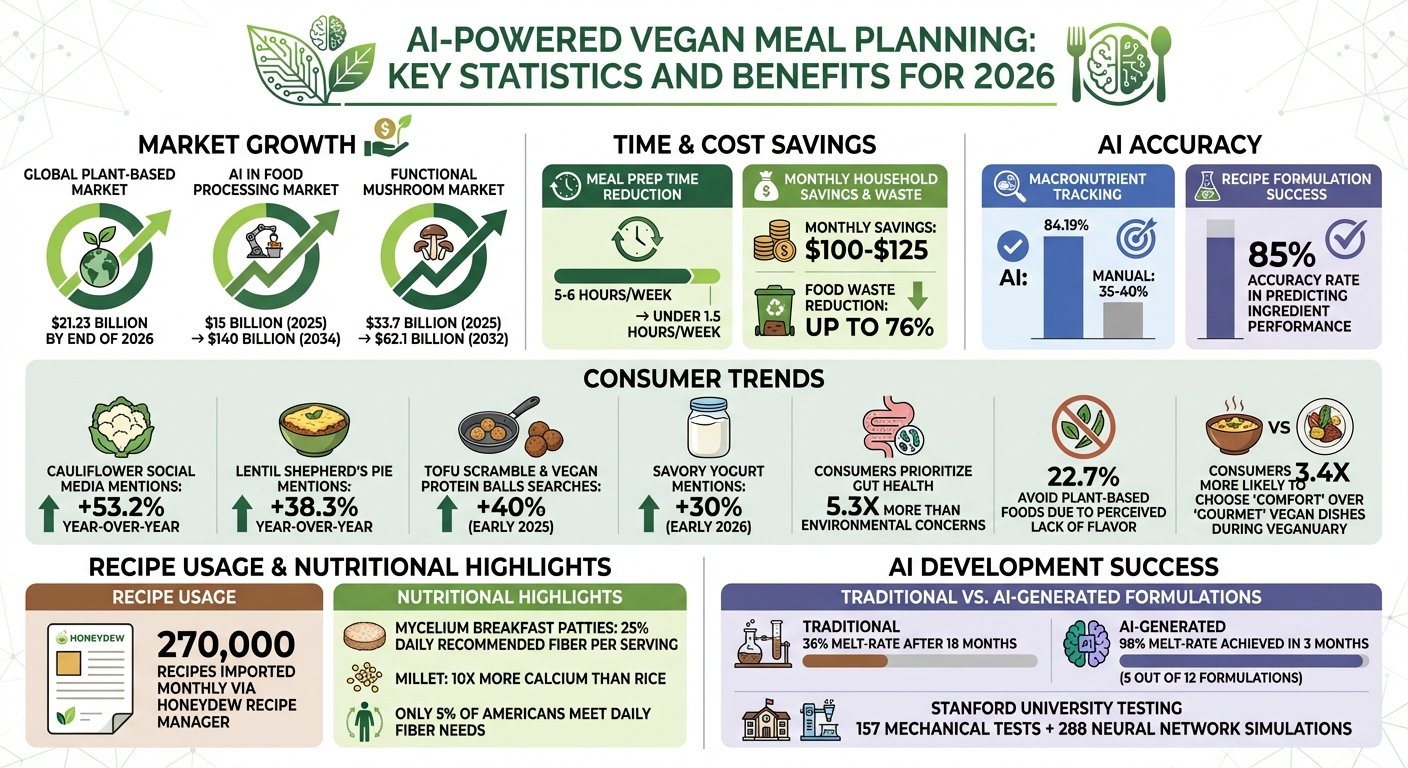
AI-Powered Vegan Meal Planning: Key Statistics and Benefits for 2026
How AI Analyzes Data to Predict Vegan Trends
Data Sources for AI Trend Analysis
AI taps into a wide range of online platforms to spot vegan trends before they hit the mainstream. From social media and online menus to food blogs and retail websites, these systems analyze posts, searches, and purchases to map out evolving culinary preferences.
By monitoring year-over-year changes in social media mentions and search volumes, AI identifies which ingredients are gaining traction. For instance, social media discussions about cauliflower jumped by 53.2%, while mentions of "Lentil Shepherd's Pie" rose by 38.3%. This helps AI distinguish between short-lived fads and trends with staying power.
AI also tracks consumer behavior through a "watch → search → try → share" loop. When a vegan recipe trends on TikTok, AI notes the spike in views, observes subsequent Google searches, and tracks how often users share their own takes on the recipe. Searches for "tofu scramble" and "vegan protein balls" surged by over 40% in early 2025, particularly among users exploring fitness-related content. These insights provide a deeper understanding of how trends emerge and spread.
Pattern Recognition and Predictive Modeling
Once the data is gathered, machine learning steps in to uncover patterns that might escape human observation. Using natural language processing (NLP), AI scans text from recipe blogs and social media posts to extract details about ingredients, techniques, and dietary preferences. It can even deduce subtleties, like recognizing that soy sauce contains gluten.
Predictive modeling combines historical data with real-time signals to forecast future trends. Algorithms analyze spikes in search volumes for DIY options like "vegan cottage cheese", rising interest in budget-friendly recipes, and dishes with fewer than 10 ingredients. For example, AI can spot early interest in adaptogens or exotic spices months before they become mainstream. During Veganuary, data shows consumers are 3.4 times more likely to reach for "comfort" vegan dishes over "gourmet" ones. These insights help forecast the ingredients and recipes that could shape the next wave of vegan cuisine.
"AI can detect a surge in interest around plant-based proteins or identify niche ingredients, such as adaptogens or exotic spices, before they gain widespread popularity." - Lakisha Davis, Tech Enthusiast
Top Vegan Recipe Trends Predicted by AI for 2026
Protein-Rich Plant-Based Ingredients
A noticeable trend for 2026 is the shift from heavily processed "fake meats" to whole-food sources of plant protein. With the global plant-based market projected to hit $21.23 billion by the end of 2026, consumers are increasingly looking for cleaner, more natural ingredient options.
One standout is mycelium, a fungi-based protein that offers a complete amino acid profile and a naturally meat-like texture. Meati Foods, for instance, has expanded its product line to include mycelium-based breakfast patties that provide 25% of the daily recommended fiber per serving, all without synthetic additives. When roasted, mycelium develops a rich, nutty flavor with umami notes, making it a favorite for plant-based dishes.
Another rising star is cabbage, which is being dubbed the "new cauliflower." Home cooks are transforming this humble vegetable into thick, roasted "steaks" brushed with chili oil or garlic for a high-fiber, budget-friendly meal option. These trends are further simplified by smarter ingredient prep techniques. Meanwhile, ancient grains like millet are gaining attention for their nutritional benefits - millet, for example, contains 10 times more calcium than rice and is a complete protein. Staples like lentils, chickpeas, and mung beans remain popular for their affordability and recognizable, whole-food appeal.
"We are not producing plant bait for the vegans and the vegetarians; they have already found their solutions… that's what we're aiming for." - Ulrich Kern-Hansen, CEO, Organic Plant Protein
These ingredients reflect a growing focus on health-conscious, whole-food eating in the vegan space.
Gut Health and Fermented Foods
With only 5% of Americans meeting their daily fiber needs, digestive health has become a key driver in ingredient choices. This focus aligns with the rising popularity of fermented foods, which AI has identified as a gateway to the functional food market. Interestingly, consumers prioritize gut health 5.3 times more than environmental concerns when selecting plant-based products.
Fermented foods are expanding beyond traditional yogurt into savory applications. For instance, savory yogurt mentions rose by 30% in early 2026, with recipes featuring yogurt-based dressings and tahini herb sauces gaining traction. Favorites like kimchi, sauerkraut, and fermented cabbage slaws are being used as flavorful, probiotic-rich bases. The functional mushroom market, valued at $33.7 billion in 2025, is expected to reach over $62.1 billion by 2032.
Home cooks are also experimenting with quick-pickled vegetables and fermented chili pastes like gochujang, which deliver the trendy "swicy" (sweet and spicy) flavor profile. These fermented additions not only support gut health but also address the 22.7% of consumers who avoid plant-based foods due to perceived lack of flavor.
Vegan Substitutes for Dairy, Eggs, and Meat
AI-driven innovations are transforming vegan substitutes to better replicate the properties of animal products. The AI in food processing market, valued at $15 billion in 2025, is predicted to grow to $140 billion by 2034. This growth is largely fueled by advancements in sensory modeling, enabling precise replication of taste, texture, and mouthfeel.
Precision fermentation has reached new heights in 2026. For example, New Culture Inc. scaled its process to produce enough vegan mozzarella for 25,000 pizzas in a single run, partnering with Kraft Heinz and ADM to bring animal-free casein cheese to select markets. These cheeses offer the stretch and melt needed for gourmet dishes, like pizzas and fondues. Similarly, Every Co collaborated with Ingredion in 2025 to introduce recombinant ovalbumin (egg protein), enabling vegan meringues and soufflés to achieve proper gelling and browning.
In the realm of plant-based seafood, New School Foods Inc. launched a 28,000 sq. ft. pilot facility in Toronto in early 2026 to produce plant-based salmon. Using directional freezing technology, they’ve developed hydrocolloid gels that mimic the muscle fibers of fish, delivering a "raw" fillet that cooks and sears like traditional salmon. Meanwhile, Eat Just reported a fivefold growth in early 2026, driven by the stability of plant-based egg supply chains compared to conventional eggs, which have been impacted by bird flu outbreaks.
"Consumer sentiment and global climate trends point toward a future where eggs just happen to come from plants." - Josh Tetrick, CEO, Eat Just
How AI Improves Vegan Recipe Development
AI is reshaping how plant-based recipes are developed by replacing traditional guesswork with precise, data-driven methods. Instead of spending years testing random ingredient combinations, AI dives deep into the molecular makeup of animal products - analyzing elements like acid balances and volatile compounds - to identify plant-based alternatives that replicate the taste, texture, and overall experience of meat, dairy, or eggs. This targeted approach allows developers to pinpoint the exact ingredients needed to mimic animal products effectively.
Flavor and Texture Matching with AI
Think of AI as a "flavor matchmaker." It sifts through massive datasets to find the perfect ingredient combinations that mirror the sensory qualities of animal products. Using advanced tools like ion chromatography to measure acidity, mass spectrometers to analyze aroma, and rheometers to study food texture under stress, AI evaluates every aspect of food. Machine learning algorithms then adjust ingredient variables - referred to as "input knobs" - to minimize the difference between plant-based and animal-based products.
One standout example comes from Climax Foods, where CEO Oliver Zahn and his team launched a vegan blue cheese in April 2023. After analyzing 100,000 plant ingredient combinations over four years, the AI identified a mix of pumpkin seeds, coconut oil, lima beans, and hemp protein powder that mimicked the creamy, tangy qualities of dairy-based blue cheese. Michelin-starred chefs even described the result as indistinguishable from its dairy counterpart. Similarly, a global food company used Turing's AI platform to enhance plant-based sliced cheese. While traditional methods led to an unsatisfactory 36% melt-rate after 18 months, the AI generated 12 new formulations in just three months, five of which achieved a 98% melt-rate replication.
"You vary all the input knobs, you measure the outputs, and then you try to squeeze the difference between the output and your animal target to be as small as possible." – Oliver Zahn, CEO, Climax Foods
Once these ingredient combinations are fine-tuned, developers rely on AI-driven testing to ensure consistency and performance.
AI-Assisted Recipe Testing and Iteration
AI doesn't just help match flavors and textures - it also speeds up the entire recipe development process. By creating "virtual labs", AI allows developers to test thousands of ingredient combinations without needing physical trials. These platforms boast an 85% accuracy rate in predicting how ingredients will perform, enabling developers to create and refine plant-based recipes in just three months - a process that traditionally took years and significant financial investment.
At Stanford University, researchers used neural networks to analyze the texture of plant-based meats in three key dimensions: tension, compression, and shear. After conducting 157 mechanical tests and 288 neural network simulations, the AI ranked the "meat-likeness" of products across 12 categories, such as fibrous, fatty, and springy. These rankings closely matched human taste-test results, providing a reliable, reproducible method for evaluating plant-based products. The AI also offers specific recommendations - like suggesting flax eggs for baking but cautioning against their use in omelets, where texture plays a critical role.
"Instead of using a trial-and-error approach to improve the texture of plant-based meat, we could envision using generative artificial intelligence to scientifically generate recipes for plant-based meat products with precisely desired properties." – Ellen Kuhl, Professor of Mechanical Engineering, Stanford University
Using AI for Personal Vegan Meal Planning
AI is reshaping how we approach vegan meal planning at home. By integrating advanced tools into everyday routines, it’s cutting down meal prep time drastically - taking it from 5–6 hours a week to less than 1.5 hours. These tools don’t just simplify planning; they also help you stay on top of trends and make cooking more efficient.
Find Trending Recipes with AI
Ever spotted a mouthwatering vegan recipe on TikTok, Instagram, or YouTube? With AI, you can now import recipes directly by pasting a URL or using the "Share" button. The AI then organizes the ingredients and instructions, making it easy to follow. Users of the Honeydew Recipe Manager alone save time by importing around 270,000 recipes every month.
What’s even better? The "Ask Honey" feature allows you to veganize any non-vegan recipe. Just type "make this vegan", and the AI reworks the ingredients and steps while keeping the essence of the dish intact.
"The ingredient substitution feature is a game-changer for my dietary restrictions. I can adapt any recipe easily!"
Once your recipes are saved, AI takes the next step - streamlining shopping and cooking.
Simplify Meal Prep with AI
Meal prep no longer has to be a guessing game. AI tools generate shopping lists that are organized by store aisle and can sync directly with Instacart. Using image recognition, the system also tracks what’s already in your pantry, helping to reduce food waste by up to 76%.
In a test conducted by CNET in November 2025, AI-generated meal plans achieved zero food waste, saving households an average of $125 per month. Abby Brody shared her experience, noting that AI saved her family around $100 weekly by making the most of ingredients already on hand.
Track Nutrition and Reduce Food Waste
AI doesn’t just make meal planning easier - it makes it smarter. With macronutrient accuracy of 84.19%, these meal planners far outperform manual calculations, which typically hover around 35–40% accuracy. This means you can effortlessly hit your protein and nutrient targets without fiddling with spreadsheets or apps.
Honeydew Recipe Manager offers these features in both a free tier (limited to 10 recipes) and a premium Honeydew Plus plan for $4.17 per month. The premium plan includes unlimited recipe storage and household sharing for up to six family members, making it easier than ever to embrace a gourmet plant-based lifestyle.
Conclusion
AI is reshaping the way we approach vegan cooking. Research shows that AI-powered meal planning can slash weekly prep time from 5–6 hours to under 1.5 hours, while also saving families between $100–$125 per month by minimizing food waste. On top of that, these tools deliver a macronutrient accuracy of 84.19%, far surpassing the 35–40% accuracy typically achieved through manual planning.
Everything comes together in one convenient platform. From importing trending recipes and converting non-vegan dishes to scanning your pantry for ingredients, AI takes care of the hard work. Honeydew Recipe Manager combines all these features seamlessly. The free plan allows you to import up to 10 recipes, while Honeydew Plus - priced at just $4.17 per month - offers unlimited recipe storage, household sharing for up to six members, and access to advanced AI tools.
Keeping up with plant-based cooking trends no longer means hours of research or complex planning. Recent AI trend analyses highlight how this shift not only aligns with the growing popularity of vegan cuisine but also showcases the technology driving creative plant-based cooking. AI handles the details, predicts trends, and tailors its suggestions to your unique cooking preferences, letting you focus on enjoying flavorful vegan meals.
Start by importing your first trending vegan recipe today and let AI take care of the rest.
FAQs
How accurate are AI vegan trend predictions?
AI has a knack for spotting vegan recipe trends with impressive accuracy by analyzing data from social media, search trends, and market behaviors. Tools like Honeydew Recipe Manager dive into viral content - think TikTok recipes - to uncover rising favorites like vegan cottage cheese or chickpea tuna salad. Using natural language processing and image recognition, AI pinpoints these trends, giving both home cooks and professional chefs a clear edge in staying on top of the latest plant-based food movements.
What vegan ingredients will be biggest in 2026?
The leading vegan ingredients projected to shine in 2026 include fermented fibers, mushrooms and other fungi, as well as precision-fermented proteins. Additionally, byproducts with high potential, such as brewer’s yeast β-glucans and okara proteins, are anticipated to play a growing role in shaping plant-based food advancements.
Can AI meal planning cut my food waste?
AI-powered meal planning tools can play a big role in cutting down on food waste. By analyzing what you already have in your pantry, these tools can suggest recipes that use ingredients close to their expiration date. They also help create smart grocery lists, so you only buy what you actually need. For instance, tools like Honeydew Recipe Manager go a step further by tracking your inventory, recommending recipes for leftovers, and even suggesting ingredient substitutions. This approach not only makes meal prep more efficient but also helps save money while encouraging smarter food usage.