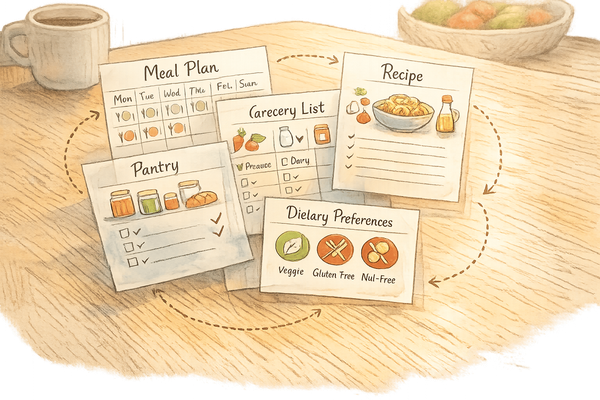
AI Meal Planning: How It Works
Learn how AI creates personalized meal plans, imports recipes, builds aisle-sorted grocery lists, tracks pantry items, and handles dietary needs.

Learn how AI creates personalized meal plans, imports recipes, builds aisle-sorted grocery lists, tracks pantry items, and handles dietary needs.

Set up Alexa or Google Assistant to control Wi‑Fi smart pressure cookers, manage timers, get recipe ideas, and follow safety tips for hands-free cooking.

Compare budget, features, size, connectivity, safety, and maintenance to choose a robotic cooking assistant that fits your kitchen and cooking style.
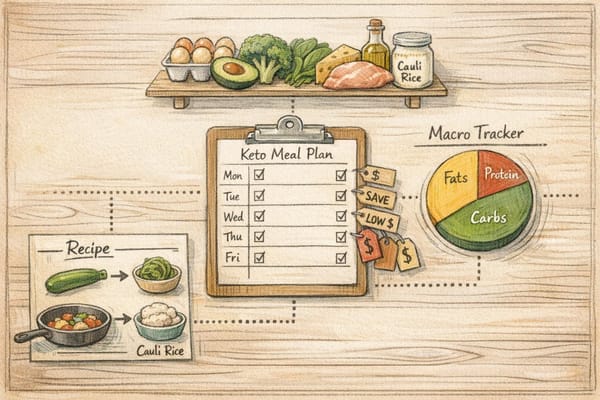
Plan low-cost keto meals with AI: automated grocery lists, macro tracking, pantry-based recipes, and ingredient swaps that cut costs and waste.
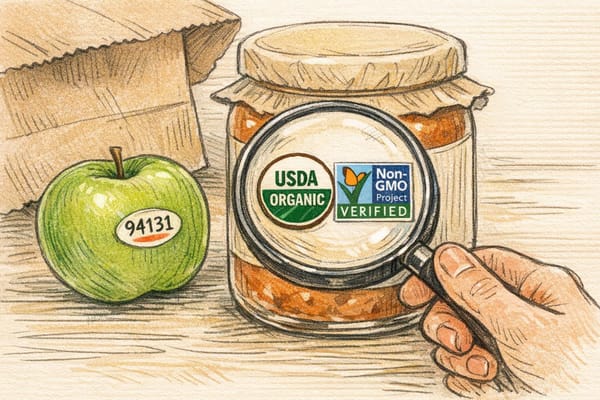
Understand USDA Organic vs Non-GMO labels, spot trusted seals, read PLU codes, and avoid misleading claims when shopping for food.

Guide to replacing butter in French recipes—olive oil, ghee, vegan butter, oils, Greek yogurt, applesauce—with ratios, best uses, pros and cons.
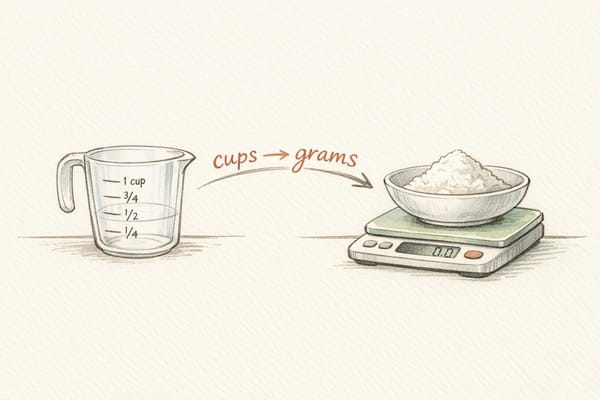
Convert cups to grams for consistent baking and easy scaling. Includes conversion ranges, scaling steps, tool tips, and common ingredient weights.

AI and IoT temperature monitoring detect and prevent spoilage, send real-time alerts, predict equipment failures, and reduce foodborne risk and waste.

AI meal planning creates calorie- and macro-based menus, smart grocery lists, recipe swaps, and portion control to support sustainable weight loss.
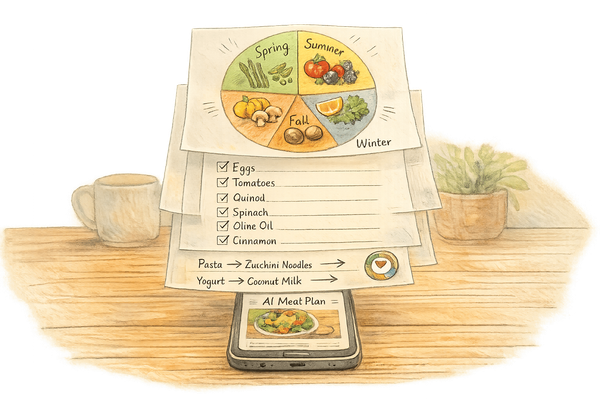
Use AI meal planning to eat seasonally: import recipes, get substitutions, build grocery lists, reduce waste, and track nutrition.
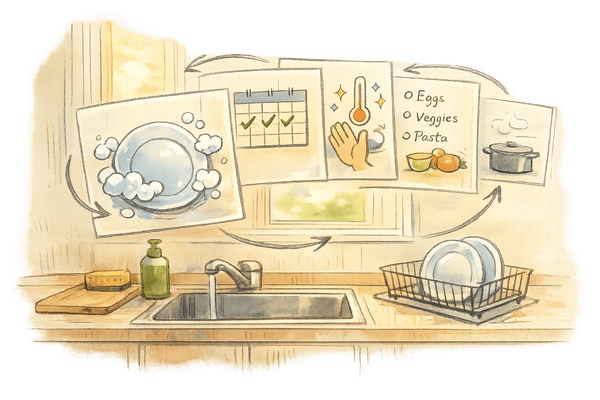
AI automates dishwashing, schedules chores, tracks hygiene, and links meal planning to cut kitchen cleaning time and reduce waste.

Use Thai or properly prepped globe eggplants as substitutes for garden eggs in West African stews, with prep, cooking, and seasoning tips.